

In November 2023, I wrote a Forbes.com article on whether there would be a Nobel Prize for AI, arguing that machine learning had become load-bearing infrastructure for modern science. In 2024, the prediction materialized in both the Nobel Prize in Physics and the Nobel Prize in Chemistry. Being right once does not make the next forecast correct, but it does make me willing to state the next one clearly enough to be falsifiable.
This is the second run of the experiment: the 2027 Nobel Prize in Physiology or Medicine will recognize the discovery and development of GLP-1-based medicines.
My leading laureate slate is Svetlana Mojsov, Jens Juul Holst, and Lotte Bjerre Knudsen. Daniel Drucker is the strongest alternate and could replace either Holst or Knudsen. The precise third seat is genuinely difficult. I reached this conclusion before asking any model. GLP-1s, or incretin therapeutics to be precise (see incretins.org), are the most consequential therapeutics of this century. Even I openly admit that I take low-dose of tirzepatide and semaglutide interchangeably and have no doubt that these will be proven as human longevity therapeutics with real aging clock data from human clinical trials (even though I think some of the therapeutics discovered by my team will be the first to go the entire cycle from using aging clocks for discovery of the target to being tested in a clinical trials using aging clocks).
Anyone with basic knowledge of the incretin field knows these four names: Svetlana Mojsov, Jens Juul Holst, Lotte Bjerre Knudsen and Daniel Drucker. Both Lotte Bjerre Knudsen and Jens Juul Holst spoke at the ARDD. Jens Juul Holst spoke in 2022 and 2024 and Lotte Bjerre Knudsen in her 2025 talk was very clear about semiglutide being the first proven longevity medicine. She is also one of the most vocal advocates for women in science.
While these four scientists are household names in our field, it is not clear who is likely to be recognized with the grand prize. Before Joel Habener’s death at the age of 88, it was clear that he and Svetlana Mojsov are the most likely candidates and that created significant uncertainty for the third candidate. Unfortunately, the most deserving candidate is no longer with us and there is more certainty.
So I put the question to four frontier systems—GPT-5.6 Pro Sol, Claude Opus 4.8, DeepSeek V4 Flash, and Grok 4.5—using the field as it exists now, after the death of Joel Habener and under the Nobel Foundation’s current eligibility rules. A Nobel Prize can recognize no more than three individuals. GLP-1 has at least four living scientists with compelling claims, and one foundational scientist who is now permanently ineligible. The models differed at the margin over Knudsen versus Drucker, but they converged on the same scientific event: GLP-1 is the next great Nobel-class achievement in medicine, and 2027 is the most plausible year.
Prediction (Personal + LLM)
Prize: 2027 Nobel Prize in Physiology or Medicine. Possibly in 2026.
Discovery: The discovery of the biologically active GLP-1 hormone, demonstration of its incretin and appetite-regulating physiology, and development of durable GLP-1-based therapies for diabetes and obesity.
Predicted laureates: Svetlana Mojsov, Jens Juul Holst, and Lotte Bjerre Knudsen.
Strongest alternate: Daniel Drucker, particularly if the committee emphasizes receptor mechanism, multi-organ physiology, and translation from hormone biology to therapeutic use.
A plausible Nobel citation: “For discoveries establishing GLP-1 as an incretin hormone and enabling GLP-1-based treatment of diabetes and obesity.”
If the award arrives in 2026, I will not be shocked. The evidence is already sufficient. But more likely it will be 2027. It gives the committee one full cycle to settle the attribution problem created by Habener’s death, while the clinical record continues to expand from glucose control and weight loss into cardiovascular, renal, hepatic, and potentially healthspan-relevant outcomes.
Why 2027?
First, the medical impact is no longer prospective. GLP-1-based drugs have already changed the standard of care for type 2 diabetes and obesity. They have moved from specialist therapies to one of the most important drug classes in the world, with benefits measured not only in glycated hemoglobin and kilograms but in major cardiovascular and renal outcomes.
Second, the causal chain is unusually complete. The committee can trace a coherent line from active peptide, to human physiology, to receptor mechanism, to molecular engineering, to clinical benefit. Many important drug classes are built from diffuse contributions that are difficult to assign. GLP-1 has identifiable scientific milestones and identifiable scientists (www.incretins.org).
Third, the precursor awards have already performed much of the historical work. The Lasker and Breakthrough committees corrected omissions, clarified contributions, and established a consensus pool. The Nobel Committee does not follow other prizes mechanically, but these awards reduce the reputational risk of acting.
Fourth, the discovery has acquired significance beyond its original indication. Nobel Prizes often arrive after the true breadth of a discovery becomes visible. GLP-1 is no longer simply an insulin-secretory hormone or even an obesity mechanism. It has become a platform for multi-organ chronic-disease intervention.
Fifth, 2027 is the first fully reset post-Habener cycle. The 2026 prize could still recognize GLP-1. My forecast of 2027 reflects the institutional time needed to re-evaluate a slate after the loss of a foundational candidate and to settle the final-seat choice between Knudsen and Drucker in the case that there is any debate.
Why the Models Now Converge?
One of the reasons I focus one hundred percent of my efforts on longevity biotechnology is to give people the freedom to enjoy a few more (and potentially many more) years of productive life. When I see brilliant scientists pass - I am genuinely sorry. Joel Habener died on December 28, 2025, at the age of 88. His work on the proglucagon gene and the peptides encoded by it created the molecular foundation on which the modern GLP-1 field was built. It is difficult to write any intellectually honest history of these medicines without placing him near the beginning. There is a tragedy in the timing. A scientist can spend more than four decades watching a fundamental discovery move from an obscure peptide to a drug class used by millions, receive almost every major precursor prize, and still die before the Nobel Committee acts.
Once the candidate pool is restricted to living scientists, the structure of the forecast becomes much clearer. The same four names recur because they represent the four indispensable stages of the GLP-1 story.
Svetlana Mojsov identified, synthesized, and established the biologically active truncated forms of GLP-1, including GLP-1(7-37), and demonstrated insulin-stimulating activity. Her contribution supplied the active molecule rather than merely the gene sequence. The historical record undercredited her for years; major scientific prizes have now begun to correct that.
Jens Juul Holst helped establish GLP-1 as a genuine incretin hormone and characterized its effects on insulin secretion, gastric function, appetite, and energy regulation in humans. This was the decisive bridge from a peptide sequence to a validated physiological target.
Lotte Bjerre Knudsen led the invention of liraglutide, the very first long-acting GLP-1 receptor agonist, and pioneered its application for obesity and cardiovascular benefits. This foundational work also led to the hypothesis of kidney benefits later proven with semaglutide. While she did not invent the semaglutide molecule itself, she led the extensive pharmacological research over the last 10-15 years that mapped its mechanisms—including recent breakthrough papers demonstrating weight-loss-independent benefits in the liver and inflammation reduction in the brain. If the Nobel Committee wants the prize to span discovery through deep mechanistic understanding and clinical translation, Knudsen is the natural third laureate.
Daniel Drucker made foundational contributions to GLP-1 receptor biology, tissue-specific mechanisms, and the translation of incretin biology across multiple organ systems. If the committee weights mechanistic physiology more heavily than drug engineering, Drucker could take the third seat.
This is the narrow point on which the models still vary. Their disagreement is not over whether GLP-1 deserves the Nobel Prize or whether the relevant window has arrived. It is over which contribution the committee will choose to represent with its final seat. That is a productive disagreement because it mirrors the actual attribution problem.
The precursor prizes make the pattern visible. The 2024 Lasker-DeBakey Clinical Medical Research Award went to Habener, Mojsov, and Knudsen for the discovery and development of GLP-1-based drugs that transformed obesity treatment. The 2025 Breakthrough Prize in Life Sciences broadened the slate to Habener, Drucker, Holst, Knudsen, and Mojsov, explicitly recognizing complementary contributions from hormone discovery through pharmaceutical development. With Habener no longer eligible, the Nobel problem has compressed from five major contributors to four living candidates competing for three seats.
While some of the models may disagree on Knudsen vs Druker, many of the scientists in the drug discovery and development community do not have any doubts. Without Knudsen, there would be no GLP-1 drug at Novo Nordisk, and we would not have uncovered the potential of this wonderful class of therapeutics. Most people who think that the discovery of a protein target is when the drug is born, have not idea about drug discovery. GLP-1 was discovered over 40 years ago but turned into the most important drug class very recently. Here, we absolutely must credit the brave and persistent scientists at Amylin and then Eli Lilly who got us the Exenatite approved for Type 2 diabetes in 2005, followed by the absolute blockbuster, Tirzepatide (GLP-1 + GIP). Tirzepatide is arguably the best drug ever developed by humans and it is the result of hard work of many people including Richard DiMarchi (multi-agonist scientific pioneer), discovery and development leaders (Jeff Emmick, Ruth Gimeno, Dan Skovronsky, Andrew Adams), and the super hero CEO, Dave Ricks. On a personal side note, GIP is a very special incretin. You can agonize it or antagonize it - you lose weight all the same and much research is focused on this target. There may be the Nobel prize specifically for GIP one day but I don’t want to deviate too much. Check out incretins.org for details. But on the Novo Nordisk side, no one shined brighter than Lotte Bjerre Knudsen. When the GLP-1 program was shaky and at the brink of collapse, she pressed on to lead the invention of liraglutide, delivering the first durable GLP-1 and driving its groundbreaking applications in obesity and cardiovascular disease. This persistence, bravery, and commitment to good science paved the way for semaglutide (Ozempic). For semaglutide, she stepped in to lead the rigorous pharmacological research that uncovered exactly how the drug works across multiple organ systems. Without Lotte Bjerre Knudsen's foundational invention of liraglutide and her subsequent pharmacological leadership, there would be no Ozempic. She is also the youngest candidate out of the four and is actively engaged in both research and promotion of science. I also think that the main potential of GLP-1s is in longevity. Since I started using GLP-1 for longevity, both tirzepatide and semaglutide reduced my aging biomarkers more than any other clinically-approved drug and it looks like they work differently. I really hope to see more clinical evidence published using the blood biochemistry and proteomic data collected in the course of the clinical studies crowning GLP-1 as clinically-proven longevity therapeutics with excellent safety profile.
Why a GLP-1 Nobel Would Be Bigger Than a Prize for Obesity And May Be The First Prize For Longevity?
The Nobel case and the longevity case are connected because GLP-1 has stopped behaving like a drug for one disease. It is becoming the clearest clinical example of a dual-purpose therapeutic: a medicine that treats defined diseases while also touching mechanisms and organ systems that shape late-life health.
At the 2025 Aging Research and Drug Discovery conference in Copenhagen (moved to David Rubenstein Treehous at Harvard in Boston in 2026, October 1-3), which I co-organize, I watched this transition become explicit. Andrew Adams of Eli Lilly reviewed the expanding evidence beyond metabolic disease and ended by asking whether GLP-1s are the world’s first longevity drugs.

Andrew Adams presenting at the ARDD 2025
Many longevity biotechnology experts, cheered. Big pharmaceutical companies avoid using this terminology. I’ve been in this industry for over twenty years and usually pharma companies are very tight lipped about longevity even when their product clearly demonstrates longevity benefits. Andrew Adams presented on longevity strategy at the ARDD in 2024 but his 2025 talk was watched very closely by the many pharma executives in the audience even when many students migrated to a parallel session where Anthony Atala presented his latest breakthroughs in artificial organs. If it would not be for the celebrity parallel session we would not have any space in the auditorium and both the media and science editors in the audience were taking notes. For a senior executive of the largest pharmaceutical company in the world to focus on longevity requires real courage.

Andrew Adams presenting at the ARDD2024
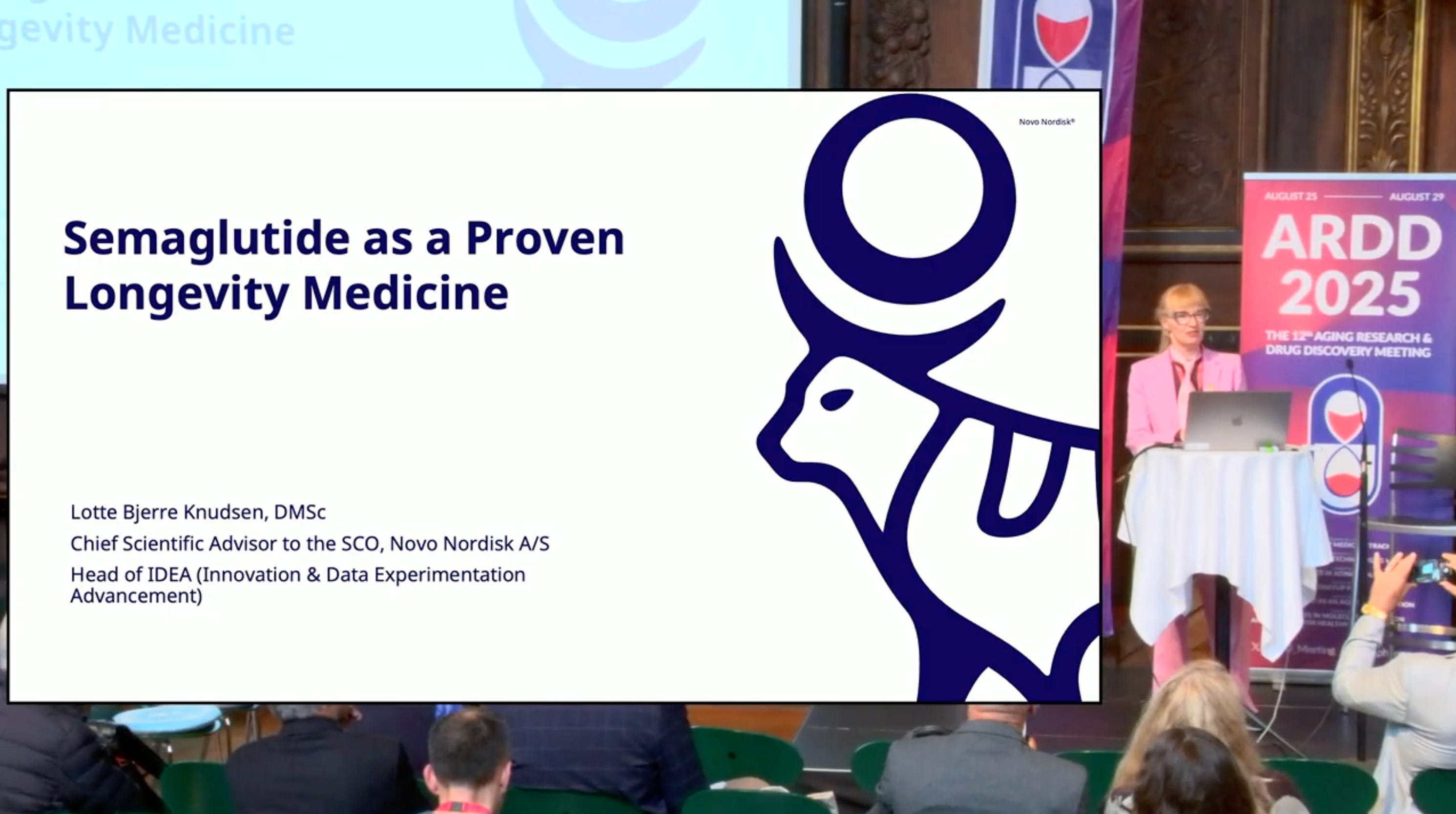
The next day, Lotte Bjerre Knudsen delivered a spectacular presentation to describe semaglutide as a proven longevity medicine.
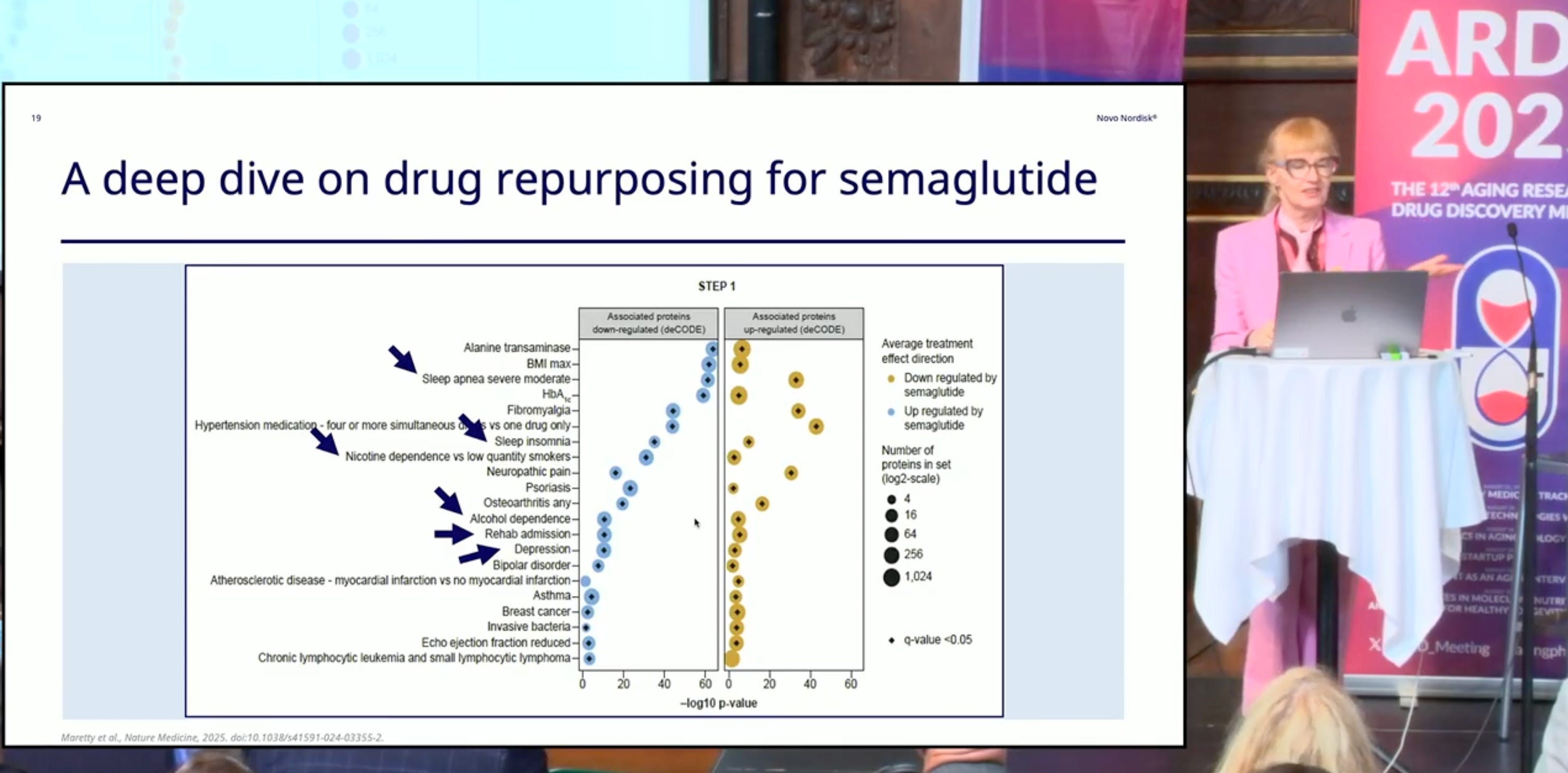
Lotte Bjerre Knudsen presenting at the ARDD2025
Nature Biotechnology’s account of that moment called it electrifying. That was the right word. The scientific leadership of the two largest GLP-1 drugmakers was publicly arguing that the class had crossed from metabolic medicine into the territory of healthspan.

The outcome data explain why. In SELECT, 17,604 adults with overweight or obesity and established cardiovascular disease, but without diabetes, were randomized to semaglutide or placebo. Semaglutide reduced cardiovascular death, nonfatal myocardial infarction, or nonfatal stroke by 20 percent. The primary SELECT publication established that the benefit extends beyond glycemic control in people with diabetes.
In FLOW, semaglutide lowered the risk of major kidney disease events by 24 percent in people with type 2 diabetes and chronic kidney disease, and the trial was stopped early after a prespecified interim analysis because the benefit was clear. The FLOW results matter for the longevity argument because kidney decline is both a major cause of late-life morbidity and a systemic marker of deteriorating physiological reserve.
Liver disease adds a third organ system. Semaglutide has shown histological benefit in metabolic dysfunction-associated steatohepatitis, including resolution of steatohepatitis and improvement in fibrosis for a meaningful share of patients. Cardiovascular, renal, and hepatic benefit across randomized trials makes GLP-1 a genuine multi-system therapeutic.
That is strong evidence for broad disease modification. It is not yet proof that GLP-1 receptor agonists directly slow aging. The distinction matters. Obesity, hyperglycemia, hypertension, and dyslipidemia independently drive cardiovascular, renal, and hepatic disease. A drug that improves those risk factors should improve downstream outcomes even if it does nothing to the fundamental biology of aging.
This April, Nicola Marino, Matteo Fiore, and I argued in Nature Health that GLP-1 receptor agonists should be classified as transitional longevity therapeutics: more strongly supported than any previous gerotherapeutic candidate, but not yet proven to be direct geroprotectors. “Transitional” is the scientifically useful word. It recognizes what the drugs have achieved without pretending that the decisive aging experiment has already been run.
The Experiment That Would Turn the Longevity Claim Into Evidence
A genuine longevity trial would need to separate direct effects on aging biology from the indirect effects of treating metabolic disease. It would enroll populations in whom that distinction can be made, follow them long enough to capture outcomes across multiple organ systems, and retain hard clinical events—not a biomarker alone—as the primary test.
The study should include validated DNA-methylation and proteomic aging clocks as secondary endpoints, serial inflammatory and metabolic profiling, body-composition imaging, strength and physical-performance measures, renal and cardiovascular function, cognition, and a predefined multi-morbidity outcome. It should also quantify how much of any benefit is mediated by weight loss, glycemic improvement, blood-pressure reduction, and changes in visceral adiposity.
Lean mass is a particularly important confounder and safety endpoint. GLP-1-induced weight loss includes both fat and lean tissue. In an older person with limited muscular reserve, loss of skeletal muscle can increase frailty, falls, disability, and mortality. A therapy intended to preserve healthspan cannot be evaluated only by the number on a scale. Trials must measure body composition, muscle strength, protein intake, and resistance exercise.
The proteomic opportunity is immediate. Large GLP-1 trials have already collected longitudinal biospecimens from thousands of participants. Modern protein-based aging clocks can ask whether the circulating proteome moves toward a younger state, whether that change is dose-dependent, and whether it predicts hard outcomes independently of weight loss. Much of the necessary data may already exist inside pharmaceutical companies. Publishing a rigorous analysis with the aging field’s AI-driven clocks would answer an important question at a fraction of the cost of running those trials again.
My own position is therefore deliberately asymmetric. The Nobel prediction is strong because it rests on completed discoveries, approved drugs, and hard outcome data. The direct-longevity claim remains provisional because the experiment designed to isolate aging biology has not yet been completed. GLP-1 can be Nobel-worthy before it is proven to be a geroprotector.
The Broader Meaning of the Prize
A 2027 Nobel Prize for GLP-1 would recognize more than one hormone or one blockbuster class. It would mark a change in what the most important medicines are expected to do. The old model was one drug, one target, one disease, one endpoint. The emerging model is a platform mechanism that changes risk across several chronic diseases and preserves function across organ systems.
That is why the longevity question belongs inside this article rather than in a separate essay. The same multi-system clinical breadth that makes GLP-1 Nobel-class is what makes it interesting to geroscience. The class may eventually show direct effects on inflammatory, metabolic, or neuroendocrine mechanisms of aging. Or it may turn out that most of the healthspan benefit comes from treating obesity and metabolic dysfunction extraordinarily well. Either result would be medically important. Only the first would establish direct geroprotection.
I often ask rooms full of biotechnology professionals who is taking a GLP-1. Usually only one or a few hands go up. That gap between scientific attention and actual adoption suggests that the clinical and commercial impact is still in its early stages. Oral peptides, small-molecule agonists, and multi-agonist combinations will expand the population that can use incretin-based therapy and will make the class more heterogeneous. The Nobel Prize, if it arrives in 2027 as I expect, may look less like recognition of a completed chapter than recognition of the platform on which the next chapter will be built.
How Do We Find The Next GLP-1?
Habener’s path from the molecular discovery of GLP-1 in the early 1980s to a drug class discussed as a possible longevity intervention took roughly forty years. That timeline reflects the difficulty of the science and the caution required to establish safety. It should also become the benchmark that the next generation of discovery systems tries to compress.
At Insilico Medicine, our goal is to discover and develop the next dual-purpose therapeutics targeting both disease and aging on a radically shorter clock and at scale. GLP-1 pathway from target to disease (T2D) to drug to biological process (obesity) to longevity (still investigational) is very inspiring. Everyone in longevity biotechnology needs to learn this story and strategy and invent new ways to compress timelines. At Insilico, we are not chasing the next Breakthrough, Lasker or Nobel. Scaling the discovery of longevity therapeutics is the most impactful area of human development. One year of life added to everyone on the planet equals 8.3 billion life years - that is over 110 million lifetimes at current average life expectancy. If we can add 10 years - that is 1.1 billion lifetimes. If this is your work, work-life balance becomes life-life balance.
Our lead program, the first out of 45+ programs we are running and with 32 developmental candidates nominated in the past 6 years, began with an aging-informed, AI-discovered novel target that has never been in clinical trial before and an AI-designed molecule for idiopathic pulmonary fibrosis, the age-related lung disease with no drug that restores rapidly declining Forced Vital Capacity (FVC) - decline in lung function that is also aparent in the elderly without IPF. It moved from target discovery to a completed phase 2a trial and into phase 3 in just over six years and we published research results at every step of the way to turn this process into the cleanest traceable experiment in AI drug discovery and development. A recent Nature Medicine News & Views article described the phase 2a result as a concrete step toward bringing AI-enabled drug discovery into the clinic. Since we could have out-licensed the drug during or after phase 2a, Harvard Business School did a business case on this drug and we added additional learning materials for anyone who is interested to learn how to do this again (including our own staff). We also started building a portfolio of different molecules with different properties to unlock the full potential of this target in multiple diseases and increase the probability that some of these molecules will make it into the category of longevity therapeutics.
The comparison is about time, not mechanism. Our lead molecule is not a GLP-1 therapy, and this is not a claim that it is already a longevity drug. The point is that an aging-informed hypothesis can now be generated, tested, optimized, and advanced clinically on a six-year rather than a forty-year clock. If that pace generalizes, the next therapeutic with broad healthspan relevance does not have to wait four decades for clinical proof.
The same discipline should govern both forecasting and drug discovery: state the hypothesis clearly, identify the constraint that could falsify it, and design the experiment so that a wrong idea can fail quickly. My hypothesis is now on the record. In 2027, the Nobel Prize in Physiology or Medicine will recognize GLP-1.
My Final Forecast
Year: 2027
Prize: Nobel Prize in Physiology or Medicine
Discovery: The discovery and therapeutic development of GLP-1 for diabetes, obesity, and cardiometabolic disease
Predicted laureates: Svetlana Mojsov, Jens Juul Holst, and Lotte Bjerre Knudsen
Strongest alternate: Daniel Drucker
And One More Thing…
I mentioned the ARDD conference several times. This year, it moved to the most epic location to date - David Rubenstein Treehouse at Harvard with several adjacent venues for parallel forums. Insilico Medicine is the largest sponsor and the main organizer of the event. Eli Lilly is the Tier 1 sponsor with AstraZeneca, Abbvie, and other pharmaceutical companies sponsoring the event. We managed to get the top biotechnology investors, many very credible startups and leading academics under one roof and with the program designed for one goal - building the longevity biotechnology industry. Registration is now open for this wonderful event - hope to see you in Boston 1-3 of October.
Disclosure: I am the founder and CEO of Insilico Medicine, which develops artificial intelligence for drug discovery, including a program referenced in this article. The Nobel forecast is my personal prediction. I also use a GLP-1 receptor agonist under medical supervision; that personal choice is not evidence that the class is a proven geroprotector.
Thank you for this elaborate piece Alex. I have a few suggestions for corrections. If you read the Lasker award announcement or my JAMA Viewpoint piece for Lasker then I explain carefully that I lead the invention of liraglutide - the very first long acting GLP1 and the first in obesity and CV benefits and the one that lead to the hypothesis of kidney benefit later shown with semaglutide. For semaglutide I led the pharmacology but I did not invent this molecule. My many papers through the last 10-15 years are focused on the pharmacology understanding. Latest papers focused on understanding the weight loss independent effect in the liver (nature medicine 2025) and inflammation benefits in the brain (just out in Nature Comms). Thank you Alex for always being good at highlighting other people’s contributions
As always great update from Alex.))